
About Program
Traditionally Civil Engineering has played an important role in improving the civic life of society by harmonizing the natural resources available on earth. Some of the major areas in the field of Civil Engineering are design and construction of various structures like bridges, buildings, roads, tunnels and dams, developing new construction technologies, Design and development of Foundation systems, Geotechnical Engineering, Transportation and Traffic Engineering, Municipal and Sanitary services, surveying, global infotech system, remote sensing, Hydraulics and Water Resources Engineering. Also, Civil Engineers have found an important role in some newer areas like design and construction of waste treatment system systems, disposal of high-level nuclear wastes, and protection of Ground water resources. In recent years Civil Engineers are facing newer challenges in infrastructure development that is resulting into development of new type of foundation Solutions, treatment of natural soils, and development of new materials.
Career Opportunities
As a civil engineer, you can take up carrier options in the diverse fields such as Building control surveyor, CAD technician, Consultant civil engineer, Contracting civil engineer, Design engineer, Nuclear engineer, Site engineer, Structural engineer, Water engineer, Rural & Urban transport engineer.
Civil engineer will have job opportunities available both in government sectors like UPSC, SSC, State Services as well as private sectors like PSU, MNC etc
After civil engineering gradations (B.Tech) student will have go for higher studies like master’s in technology (M.TECH) and MBA.
Department Highlights
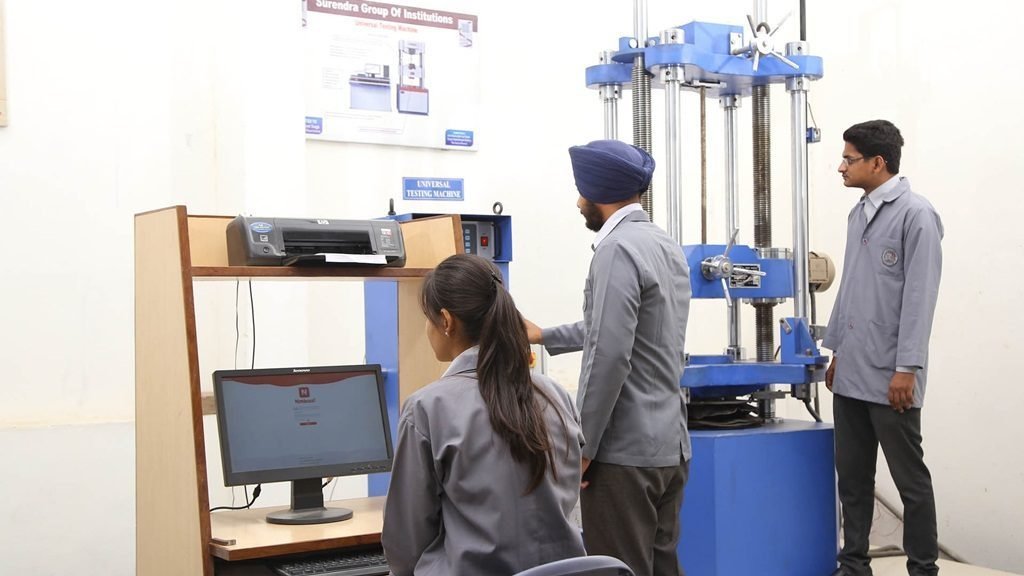
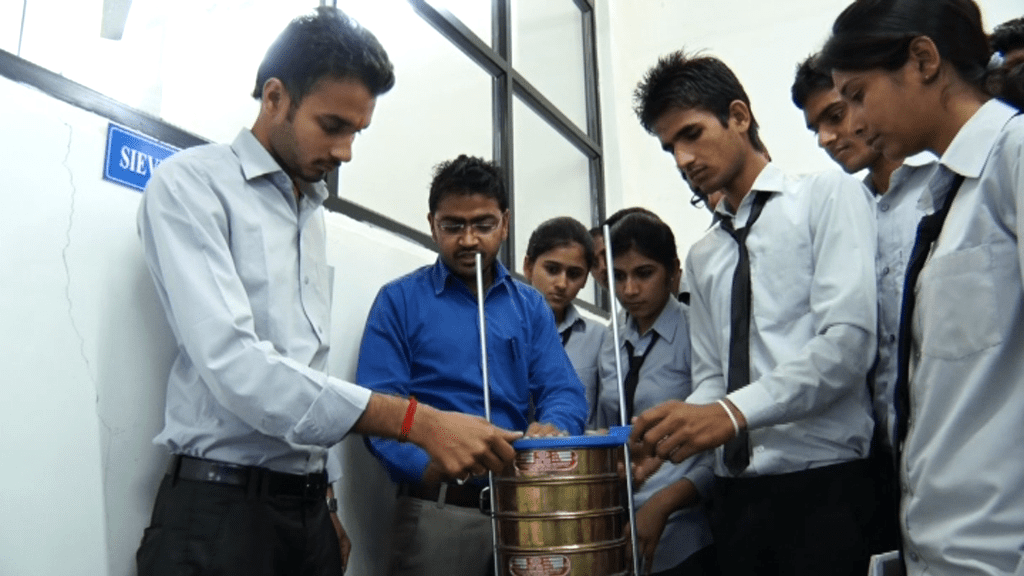
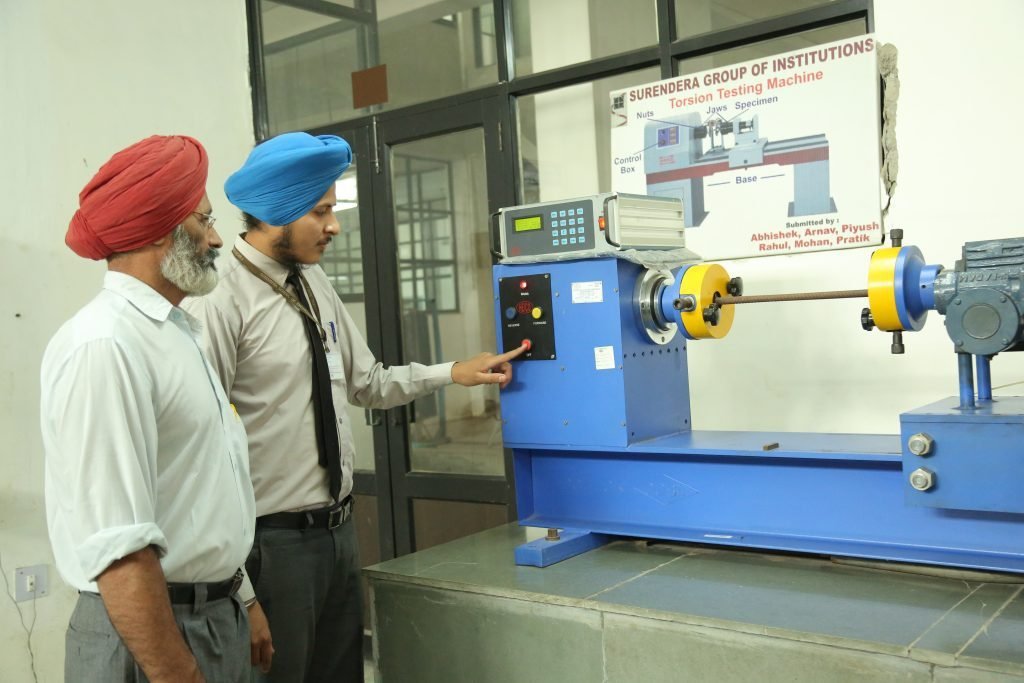
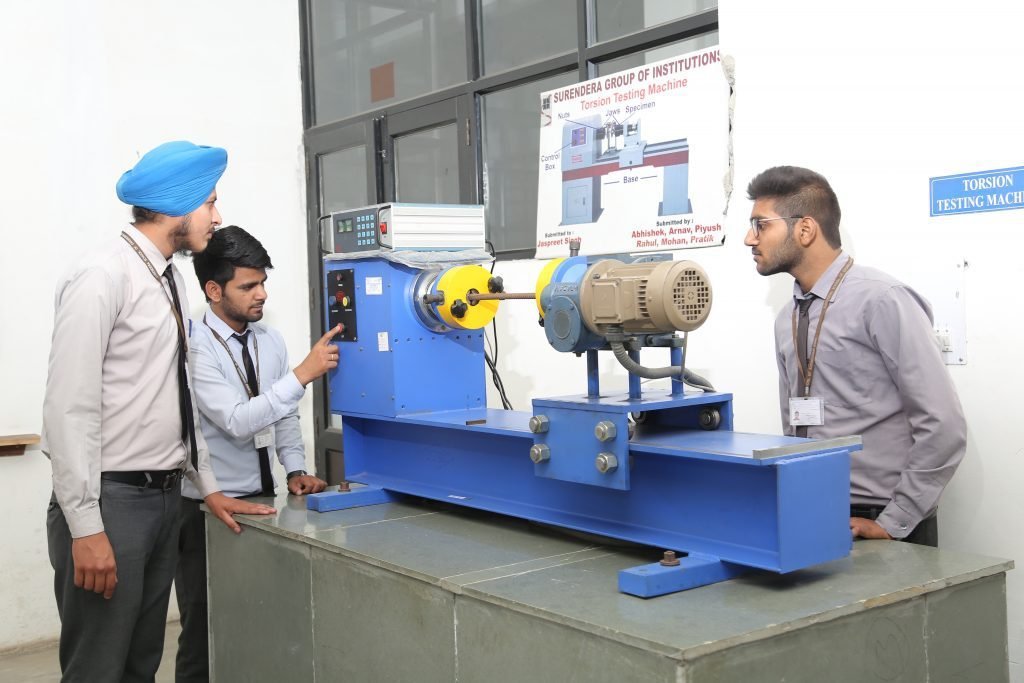
Laboratories
The Civil Engineering department comprises of following labs:-
- Surveying Lab
- Geotechnical Engineering Lab
- Structural Analysis Lab
- Solid Mechanics Lab
- Fluid Mechanics / Hydraulics Engineering Lab
- Environmental Engineering / Water supply and sanitation Lab
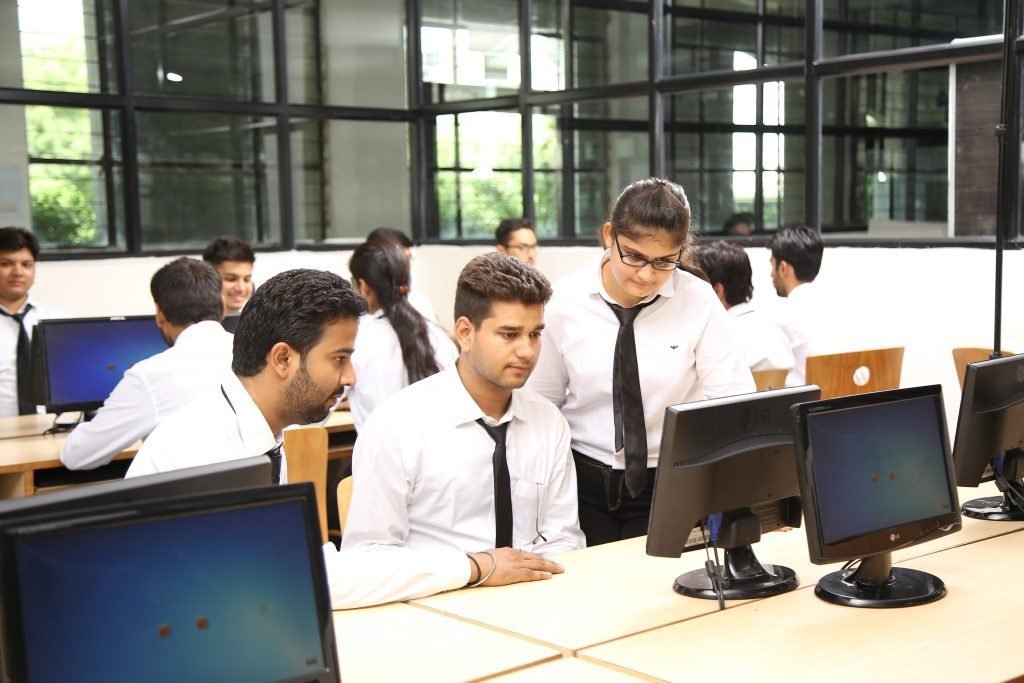
- Computer Aided Design Lab
- Transportation Engineering Lab
- Concrete Technology Lab
- Building Drawing Lab
- Civil Engineering Materials Lab
Projects / Survey Camps
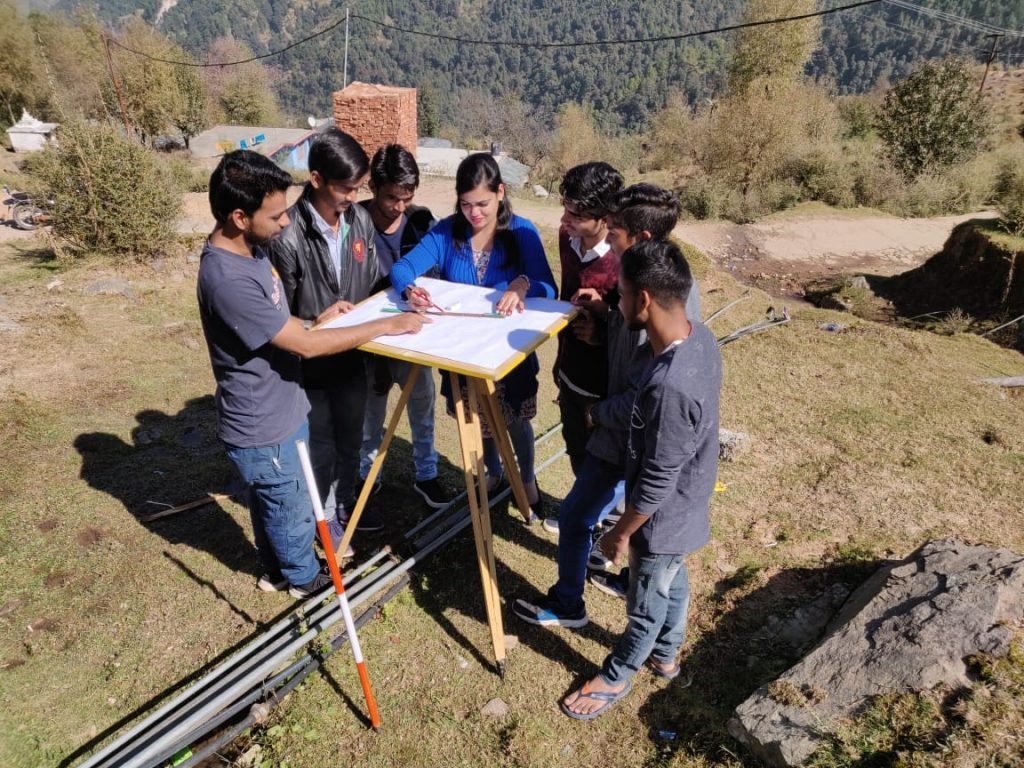
Project-based learning (PBL) is a student-centered pedagogy that involves a dynamic classroom approach in which it is believed that students acquire a deeper knowledge through active exploration of real-world challenges and problems. Students learn about a subject by working for an extended period of time to investigate and respond to a complex question, challenge, or problem. It is a style of active learning and inquiry-based learning. PBL integrates knowing and doing. Students learn knowledge and elements of the core curriculum, but also apply what they know to solve authentic problems and produce results that matter.



Seminars / Workshops / Industrial Visits / Guest Lectures / Conferences
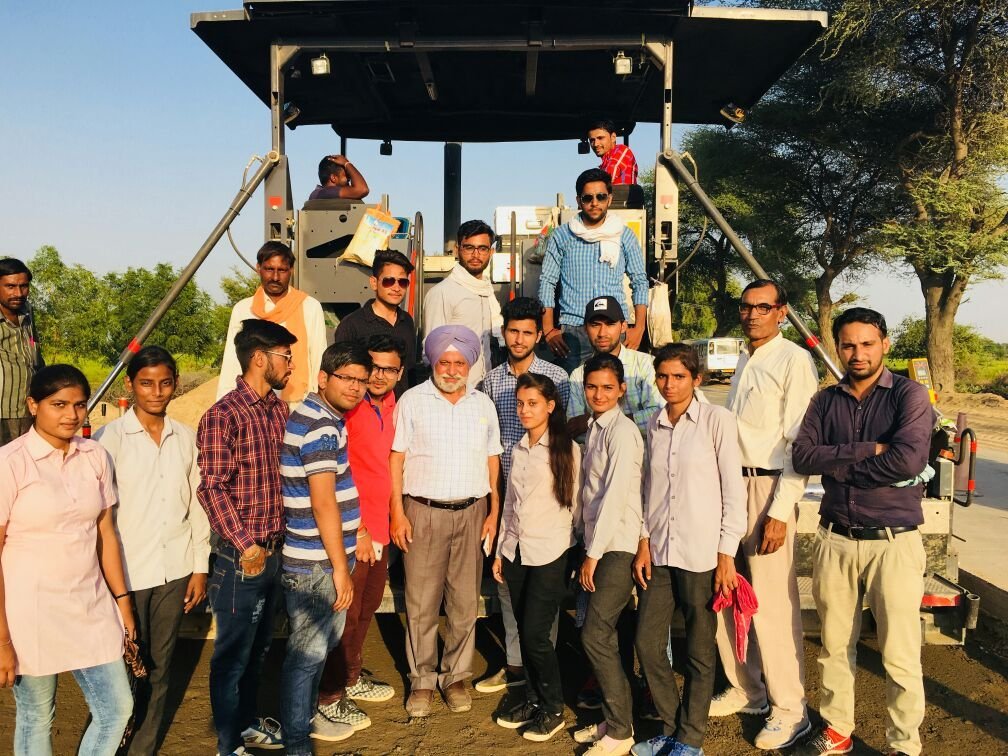
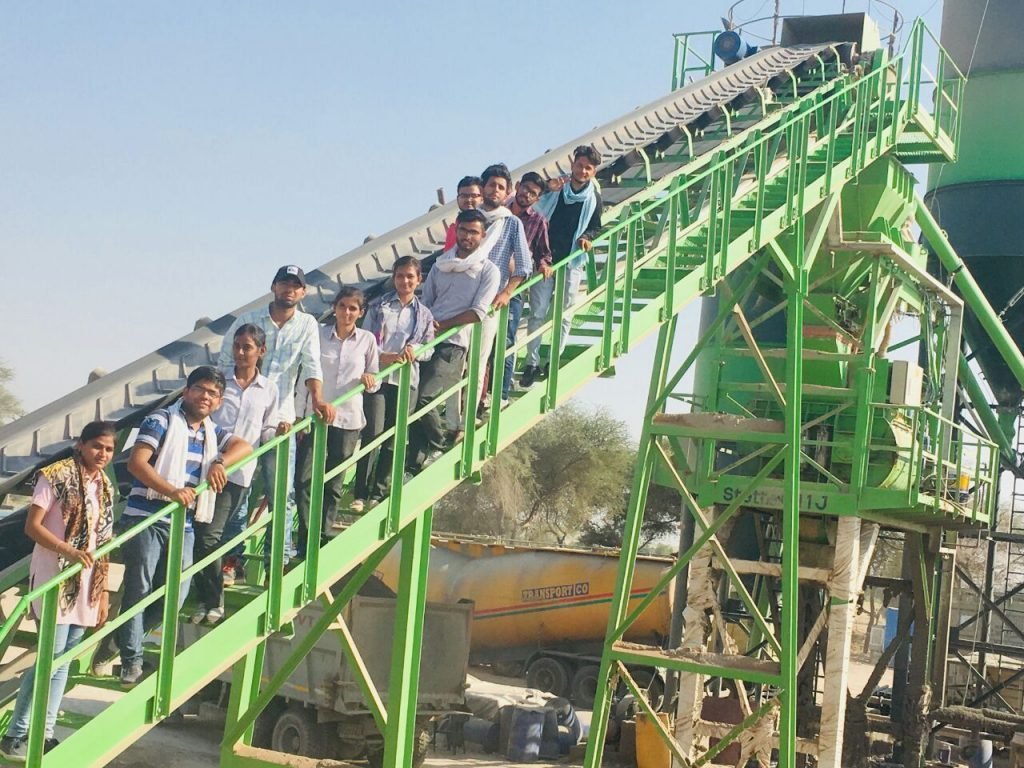
A Graduate degree program is demanding hence arises a dire need to conduct extra activities apart from lectures, tutorials and laboratories. Activities like Seminars / Workshops / Industrial Visits / Guest Lectures / Conferences etc. help the students to –
- Encourage Dialogue
- Receive Fresh Perspective
- Develop New Ideas
- Improve Skills
- Create Network for Career